

Hey there! As a supplier of building material hoists, I often get asked about the stability calculation method for these essential pieces of equipment. In this blog post, I'll break down the key aspects of stability calculation for building material hoists, so you can have a better understanding of how to ensure the safety and efficiency of your construction projects.
Why Stability Calculation Matters
First off, let's talk about why stability calculation is so important. A building material hoist is used to transport heavy loads vertically on a construction site. If it's not stable, it can lead to all sorts of problems, like tipping over, which is not only dangerous for the workers on site but can also cause significant damage to the equipment and the surrounding area. So, getting the stability calculation right is crucial for everyone's safety and the success of the project.
Factors Affecting Hoist Stability
There are several factors that can affect the stability of a building material hoist. Let's take a look at some of the most important ones:
1. Load Weight and Distribution
The weight of the load being lifted is a major factor. Obviously, the heavier the load, the more stress it puts on the hoist. But it's not just about the weight; the distribution of the load also matters. If the load is unevenly distributed, it can create an imbalance, increasing the risk of the hoist tipping. For example, if all the weight is concentrated on one side of the hoist platform, it will put more pressure on that side, potentially causing instability.
2. Hoist Design and Structure
The design and structure of the hoist itself play a big role in its stability. A well - designed hoist will have a proper base, support structure, and counterweights to keep it balanced. The height of the hoist also matters. Taller hoists are generally more prone to instability because they have a higher center of gravity. So, the design needs to take into account the maximum height at which the hoist will operate.
3. Environmental Conditions
Environmental factors such as wind, rain, and uneven ground can also affect hoist stability. Strong winds can exert a lateral force on the hoist, pushing it off - balance. Rain can make the ground slippery, reducing the friction between the hoist's base and the ground. And if the ground is uneven, it can cause the hoist to tilt.
Stability Calculation Methods
1. Static Stability Calculation
Static stability calculation is used to determine the hoist's stability under normal, non - moving conditions. This method involves calculating the forces acting on the hoist, including the weight of the hoist itself, the load, and any counterweights. The basic principle is to ensure that the sum of the moments (forces multiplied by their distances from a pivot point) around the base of the hoist is zero. If the moments are not balanced, the hoist will be unstable.
For example, let's say we have a hoist with a load on one side and a counterweight on the other. We need to calculate the moment created by the load and the moment created by the counterweight. If the moment of the load is greater than the moment of the counterweight, the hoist will tend to tip towards the load side.
2. Dynamic Stability Calculation
Dynamic stability calculation takes into account the forces acting on the hoist when it is in motion. When the hoist is starting, stopping, or changing direction, there are additional inertial forces that need to be considered. These forces can be quite significant, especially for heavy loads or high - speed hoists.
To calculate dynamic stability, we need to use more complex equations that involve acceleration, deceleration, and the mass of the hoist and the load. This helps us ensure that the hoist remains stable during all phases of operation.
Ensuring Hoist Stability in Practice
Now that we know the calculation methods, how can we ensure hoist stability in real - world construction projects?
1. Proper Installation
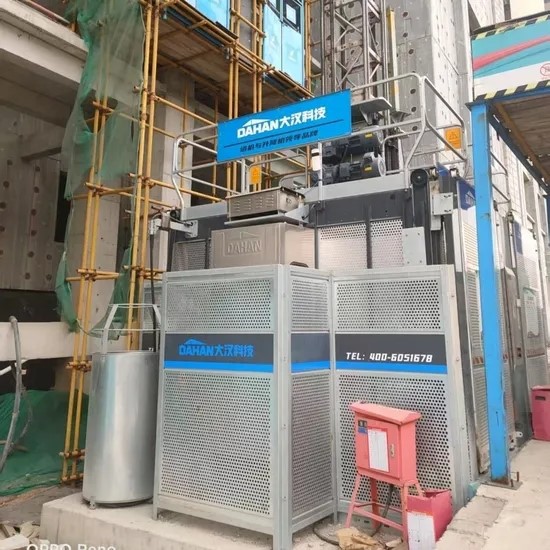
Proper installation is the first step. The hoist should be installed on a flat, solid surface. The base should be firmly anchored to the ground to prevent movement. All the components of the hoist should be installed according to the manufacturer's instructions.

2. Regular Inspections
Regular inspections are essential. Before each use, the hoist should be checked for any signs of damage or wear. The load - bearing components, such as cables, pulleys, and hooks, should be inspected for cracks or other defects. The counterweights should also be checked to make sure they are in place and the right weight.
3. Operator Training
The operators of the hoist should be properly trained. They need to understand the limitations of the hoist, how to load it correctly, and how to operate it safely. A well - trained operator can prevent many stability - related problems by following the proper procedures.
Our Building Material Hoists
At our company, we take stability very seriously. Our building material hoists are designed with the latest technology to ensure maximum stability. We use high - quality materials in the construction of our hoists, and each one undergoes rigorous testing before it leaves our factory.
If you're in the market for a reliable building material hoist, we've got you covered. We offer a range of hoists, including Construction Elevator Lift, Construction Personnel Hoist, and Building Hoist Lift. These hoists are not only stable but also efficient, helping you get your construction projects done faster and safer.
If you're interested in learning more about our products or have any questions about hoist stability, don't hesitate to reach out. We're always happy to have a chat and help you find the right hoist for your needs. Whether you're a small - scale contractor or a large construction company, we can provide the solutions you're looking for.
References
- "Construction Hoist Safety Manual", Industry Standard Publication
- "Engineering Principles of Lifting Equipment", Academic Textbook on Mechanical Engineering


