

Yo, what's up everyone! As a supplier of flat top tower cranes, I often get asked about the differences between flat top tower cranes and luffing jib tower cranes. So, I thought I'd write this blog to break it down for you all.
1. Structure and Design
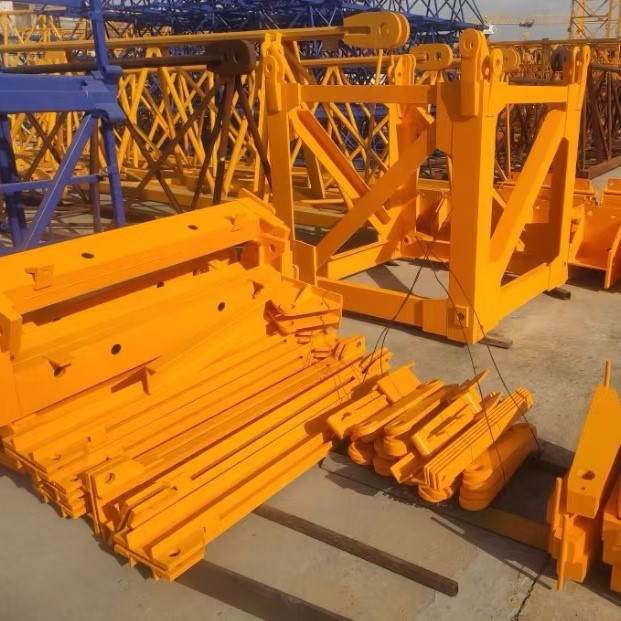
Let's start with the structure. A flat top tower crane, as the name suggests, has a flat top design. It doesn't have the typical A - frame or cathead structure like some other cranes. This flat design makes it really easy to assemble and disassemble. When you're working on a job site, time is money, right? With a flat top tower crane, you can save a lot of time during the installation and removal process.
On the other hand, a luffing jib tower crane has a jib that can be raised and lowered. This jib is attached to the top of the mast at an angle. The ability to luff the jib gives it a unique advantage in certain situations, but we'll get to that later.
The flat top tower crane's simple structure also means it's more compact when it's not in use. You can store it more easily on a job site or transport it from one place to another. It's a great option for contractors who move their equipment around a lot. For example, if you're working on a series of small - scale construction projects in different locations, a flat top tower crane can be a real time - saver. Check out our Inner Climbing Tower Crane for a great example of a well - designed flat top tower crane.
2. Working Range
Now, let's talk about the working range. A flat top tower crane usually has a fixed jib length. The jib extends horizontally from the mast, and the load is moved along the length of the jib. This gives it a wide horizontal working range. It's perfect for construction sites where you need to cover a large area horizontally, like building a big warehouse or a multi - story apartment complex.
A luffing jib tower crane, however, has a variable working range. Since the jib can be raised and lowered, it can work in areas with limited vertical clearance. For instance, if you're working in a city center where there are a lot of tall buildings nearby, a luffing jib tower crane can be adjusted to avoid hitting other structures. But its horizontal reach might be a bit more limited compared to a flat top tower crane of the same height.
If you're looking for a flat top tower crane with a good working range, our Tower Crane 10 Ton is a great choice. It can handle heavy loads and cover a decent horizontal area, making it suitable for a variety of construction projects.
3. Load Capacity
Load capacity is another important factor. Flat top tower cranes are known for their high load - carrying capacity. They can handle heavy loads over a long distance along the jib. This is because of their stable structure and the way the load is distributed. The flat top design allows for a more even distribution of the load, which means you can lift heavier objects without worrying too much about the crane tipping over.
Luffing jib tower cranes also have a good load capacity, but it can vary depending on the angle of the jib. When the jib is at a lower angle, it can usually carry more weight. But as you raise the jib, the load - carrying capacity might decrease slightly. This is something to keep in mind when choosing a crane for your project.
Our Zoomlion Tower Crane is a high - quality flat top tower crane with an excellent load - carrying capacity. It's built to handle tough jobs and can lift heavy materials with ease.
4. Cost
Cost is always a big consideration in construction projects. Generally speaking, flat top tower cranes are more cost - effective in terms of purchase price. Their simpler design means they're cheaper to manufacture, and that cost savings is often passed on to the customer. Also, the maintenance cost of a flat top tower crane is usually lower. There are fewer moving parts compared to a luffing jib tower crane, which means there's less that can go wrong.
Luffing jib tower cranes are more expensive to buy and maintain. The complex mechanism that allows the jib to luff requires more sophisticated engineering and more parts. This means higher manufacturing costs and more expensive repairs if something breaks down.
If you're on a tight budget but still need a reliable crane, a flat top tower crane is definitely the way to go. You can get a lot of bang for your buck with a flat top tower crane.
5. Safety
Safety is crucial in any construction site. Flat top tower cranes are relatively safe because of their stable structure. The flat top design provides a good center of gravity, which reduces the risk of the crane toppling over. Also, since the jib is fixed horizontally, there's less chance of the load swinging wildly during operation.

Luffing jib tower cranes also have safety features, but the ability to luff the jib adds an extra level of complexity. Operators need to be more careful when adjusting the jib angle to avoid overloading the crane or causing the load to swing uncontrollably.
Both types of cranes should be operated by trained and experienced operators. But if you're looking for a crane that's a bit easier to operate safely, a flat top tower crane might be a better choice.
Conclusion
So, there you have it - the main differences between a flat top tower crane and a luffing jib tower crane. Each type of crane has its own advantages and disadvantages, and the choice depends on your specific construction needs.
If you're looking for a crane that's easy to assemble, has a wide horizontal working range, is cost - effective, and relatively safe, a flat top tower crane is a great option. As a supplier of flat top tower cranes, I can offer you high - quality products that meet your requirements.
If you're interested in learning more about our flat top tower cranes or have any questions about which crane is right for your project, feel free to reach out. We're here to help you make the best decision for your construction needs. Let's talk and see how we can work together to get your project done efficiently and safely.
References
- Construction Equipment Handbook
- Tower Crane Operation Manuals


