

As a seasoned supplier in the construction hoist industry, I've witnessed firsthand the crucial role that speed adjustment plays in the efficiency and safety of construction projects. Construction hoists are indispensable equipment on building sites, transporting personnel and materials vertically. Understanding the various speed adjustment methods is essential for optimizing their performance.
1. Mechanical Speed Adjustment
One of the traditional methods of speed adjustment for construction hoists is mechanical. This approach relies on physical components to control the speed of the hoist.
Gear - Based Systems
In gear - based speed adjustment, the hoist uses a set of gears with different tooth counts. By changing the gear ratio, the speed of the hoist can be altered. For example, a lower gear ratio provides more torque but lower speed, which is suitable for lifting heavy loads. Conversely, a higher gear ratio allows for faster movement but with less torque. This system is relatively simple and reliable, making it a popular choice in many older construction hoist models. However, it has limitations in terms of the number of discrete speed settings and the smoothness of speed changes.
Belt and Pulley Systems
Belt and pulley systems can also be used for speed adjustment. By changing the size of the pulleys, the speed of the hoist can be adjusted. A larger driving pulley and a smaller driven pulley will result in a higher speed, while the opposite configuration will slow down the hoist. This method is often used in combination with other systems to provide a more flexible speed range. But it requires regular maintenance to ensure the proper tension of the belt, as a loose belt can lead to slippage and inaccurate speed control.
2. Electrical Speed Adjustment
With the advancement of technology, electrical speed adjustment methods have become more prevalent in modern construction hoists.
Variable Frequency Drives (VFDs)
Variable Frequency Drives are perhaps the most widely used electrical speed adjustment method today. A VFD works by changing the frequency of the electrical power supplied to the hoist motor. Since the speed of an AC motor is directly proportional to the frequency of the power supply, by adjusting the frequency, the speed of the hoist can be precisely controlled. VFDs offer several advantages. They provide a wide range of speed settings, from very slow for delicate operations to high - speed for rapid transportation. They also allow for smooth acceleration and deceleration, reducing wear and tear on the hoist components and improving safety. Additionally, VFDs can save energy by adjusting the motor speed according to the load requirements. For instance, when the hoist is carrying a light load, the motor can run at a lower speed, consuming less power.
DC Motor Control
DC motors have also been used in construction hoists for speed adjustment. In a DC motor control system, the speed is adjusted by varying the voltage applied to the motor. By using a controller, the voltage can be regulated to achieve the desired speed. DC motor control offers good speed regulation and can provide high torque at low speeds. However, DC motors require more maintenance compared to AC motors, as they have brushes that need to be replaced periodically.
3. Hydraulic Speed Adjustment
Hydraulic systems are another option for speed adjustment in construction hoists.
Hydraulic Pump Control
In a hydraulic hoist, the speed is controlled by adjusting the flow rate of the hydraulic fluid. This is typically done by controlling the output of the hydraulic pump. A variable - displacement pump can be used to change the flow rate, which in turn changes the speed of the hoist. Hydraulic systems offer high power density and can provide smooth and precise speed control. They are also well - suited for heavy - duty applications, as they can generate large forces. However, hydraulic systems require careful maintenance to prevent leaks and ensure the proper functioning of the hydraulic components.
4. Importance of Speed Adjustment in Construction Hoists
Safety
Speed adjustment is crucial for safety on construction sites. Different tasks may require different speeds. For example, when transporting personnel, a slower and more controlled speed is necessary to ensure their safety. In case of an emergency, the ability to quickly reduce the speed of the hoist can prevent accidents. On the other hand, when lifting light materials, a higher speed can improve efficiency without compromising safety.
Efficiency
Proper speed adjustment can significantly improve the efficiency of construction projects. By adjusting the speed according to the load and the task at hand, the hoist can complete more cycles in a given time. This means that more materials can be transported, and construction work can progress more rapidly.
Equipment Longevity
Controlling the speed of the hoist can also extend the lifespan of the equipment. Smooth acceleration and deceleration reduce the stress on the hoist components, such as the motor, gears, and cables. This reduces the likelihood of premature wear and failure, saving on maintenance and replacement costs.
5. Our Offerings and the Role of Speed Adjustment
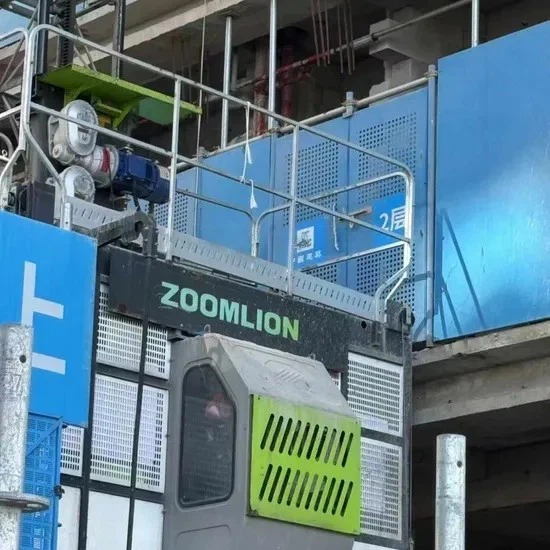
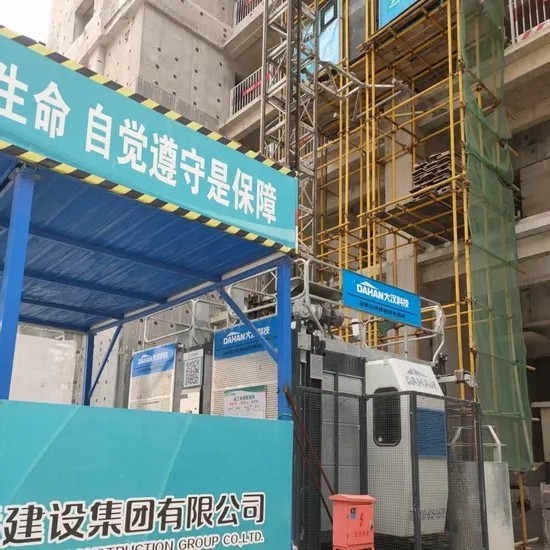
As a construction hoist supplier, we offer a wide range of hoists equipped with different speed adjustment methods. Our Construction Elevator Lift models are designed to meet the diverse needs of construction projects. Whether you need a hoist with a simple mechanical speed adjustment for a small - scale project or a high - tech hoist with a VFD for a large - scale building, we have the right solution for you.
Our Building Hoist Lift are built with advanced speed adjustment technologies to ensure optimal performance. The ability to adjust the speed precisely allows for better control during the lifting process, whether it's for transporting construction materials or personnel to different floors of a building.
Our Construction Personnel Hoist prioritize safety above all else. The speed adjustment features in these hoists are carefully calibrated to provide a smooth and safe ride for workers. We understand that the safety of your workforce is your top concern, and our hoists are designed to meet the highest safety standards.
6. Contact Us for Procurement
If you're in the market for a construction hoist and want to learn more about the speed adjustment methods available, or if you have specific requirements for your construction project, we're here to help. Our team of experts can provide you with detailed information about our products and guide you through the selection process. Contact us today to start a procurement discussion and find the perfect construction hoist for your needs.
References
- Construction Hoist Handbook, Industry Publication
- Electrical and Mechanical Engineering Principles for Construction Equipment, Academic Textbook
- Hydraulic System Design and Maintenance in Construction Machinery, Technical Journal


