

In the realm of construction, cranes are the unsung heroes that make the seemingly impossible possible. Among the various types of cranes, Tower Head Cranes and Luffing Jib Cranes stand out as two popular choices, each with its own unique set of features, advantages, and applications. As a supplier of Tower Head Crane, I've had the privilege of witnessing firsthand the distinct capabilities of these two crane types. In this blog post, I'll delve into the differences between Tower Head Cranes and Luffing Jib Cranes, shedding light on their design, functionality, and ideal use cases.
Design and Structure
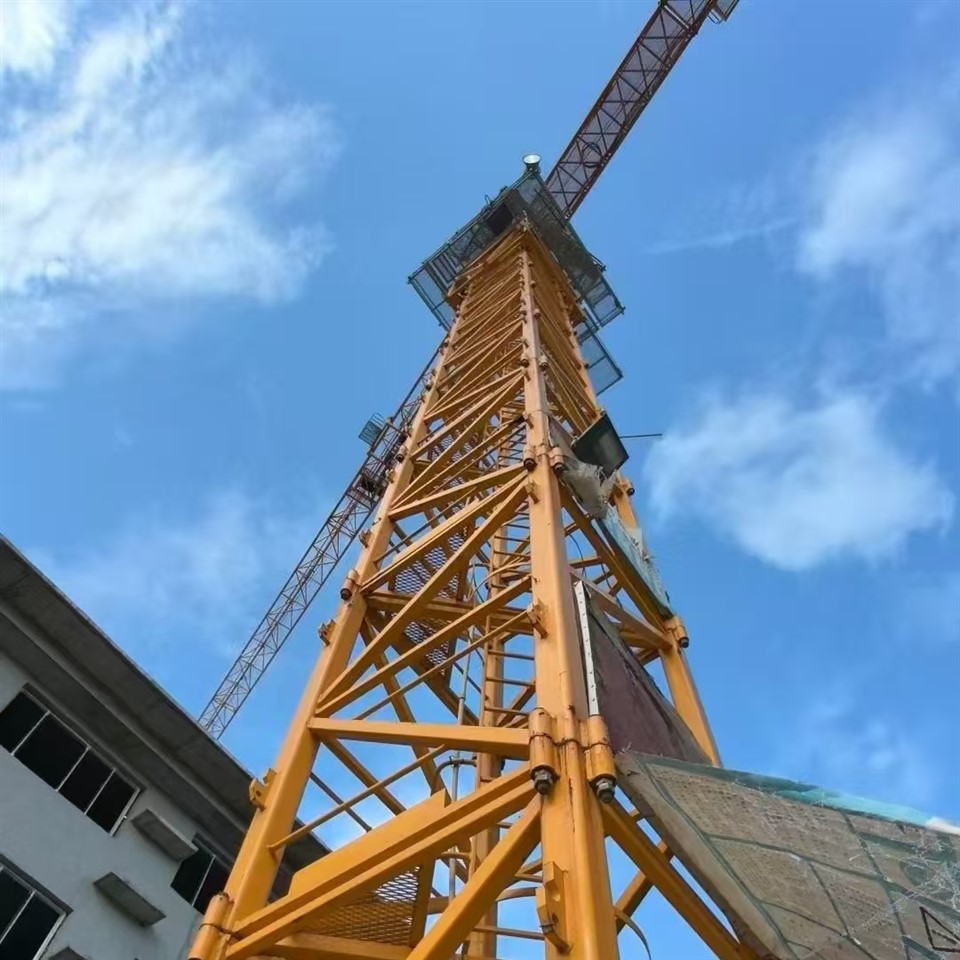
One of the most noticeable differences between Tower Head Cranes and Luffing Jib Cranes lies in their design and structure. A Tower Head Crane, also known as a Hammerhead Tower Crane, features a horizontal jib that extends out from the top of the tower. This jib is typically fixed at a set angle and does not have the ability to luff, or move up and down. The counter-jib, located on the opposite side of the tower, balances the load on the jib and houses the hoisting machinery and electrical components.
On the other hand, a Luffing Jib Crane has a jib that can be raised and lowered, or luffed, using a hydraulic or mechanical system. This allows the crane to adjust its working radius and height, making it more versatile in tight spaces or areas with limited clearance. The jib of a Luffing Jib Crane is usually shorter than that of a Tower Head Crane, but it can still reach significant heights and distances.
Functionality and Operation
The design differences between Tower Head Cranes and Luffing Jib Cranes also translate into differences in functionality and operation. Tower Head Cranes are known for their high lifting capacity and long reach, making them ideal for large-scale construction projects such as high-rise buildings, bridges, and industrial facilities. The fixed jib of a Tower Head Crane provides a stable platform for lifting heavy loads over long distances, and the hoisting machinery can be easily adjusted to control the speed and direction of the load.
Luffing Jib Cranes, on the other hand, are more suited for projects with limited space or complex geometries. The ability to luff the jib allows the crane to work in confined areas, such as urban construction sites or between existing structures. Luffing Jib Cranes can also be used in areas with high wind speeds, as the luffed jib reduces the wind resistance and improves the stability of the crane.
Safety and Stability
Safety is always a top priority in the construction industry, and both Tower Head Cranes and Luffing Jib Cranes are designed with a number of safety features to ensure the well-being of operators and workers. Tower Head Cranes are typically equipped with anti-collision systems, load moment indicators, and wind sensors to prevent accidents and ensure safe operation. The fixed jib of a Tower Head Crane also provides a stable platform for lifting heavy loads, reducing the risk of swaying or tipping.
Luffing Jib Cranes, on the other hand, have additional safety features to account for the movement of the jib. These features include limit switches, overload protection systems, and emergency stop buttons to prevent the jib from over-luffing or exceeding its load capacity. The ability to luff the jib also allows the crane to avoid obstacles and maintain a safe distance from other structures, reducing the risk of collisions.
Cost and Maintenance
Another important factor to consider when choosing between a Tower Head Crane and a Luffing Jib Crane is the cost and maintenance requirements. Tower Head Cranes are generally less expensive to purchase and operate than Luffing Jib Cranes, as they have a simpler design and fewer moving parts. However, the cost of installation and dismantling a Tower Head Crane can be higher, as it requires a larger foundation and more complex rigging.
Luffing Jib Cranes, on the other hand, are more expensive to purchase and operate, but they offer greater flexibility and versatility. The hydraulic or mechanical system used to luff the jib requires regular maintenance and servicing to ensure optimal performance, and the cost of replacement parts can be higher. However, the ability to work in tight spaces and avoid obstacles can often offset the higher cost of a Luffing Jib Crane.
Ideal Use Cases
Based on their design, functionality, safety, and cost, Tower Head Cranes and Luffing Jib Cranes are best suited for different types of construction projects. Tower Head Cranes are ideal for large-scale projects with open spaces and long lifting distances, such as high-rise buildings, bridges, and industrial facilities. The high lifting capacity and long reach of a Tower Head Crane make it the preferred choice for lifting heavy materials and equipment to great heights.
Luffing Jib Cranes, on the other hand, are more suited for projects with limited space or complex geometries, such as urban construction sites, residential buildings, and renovation projects. The ability to luff the jib allows the crane to work in tight spaces and avoid obstacles, making it the ideal choice for projects where space is at a premium.

Conclusion
In conclusion, Tower Head Cranes and Luffing Jib Cranes are two distinct types of cranes with their own unique set of features, advantages, and applications. As a supplier of Tower Head Crane, I understand the importance of choosing the right crane for the job. Whether you're working on a large-scale construction project or a small renovation, it's essential to consider the design, functionality, safety, cost, and maintenance requirements of each crane type before making a decision.
If you're in the market for a Tower Head Crane or have any questions about our products, please don't hesitate to contact us. Our team of experts is available to provide you with more information and help you choose the right crane for your project. We look forward to working with you and helping you achieve your construction goals.
References
- Construction Equipment Guide. (n.d.). Tower Cranes: Hammerhead vs. Luffing Jib. Retrieved from https://www.constructionequipmentguide.com/tower-cranes-hammerhead-vs-luffing-jib/34018
- Konecranes. (n.d.). Tower Cranes: Hammerhead vs. Luffing Jib. Retrieved from https://www.konecranes.com/en-us/products/tower-cranes/hammerhead-vs-luffing-jib
- Liebherr. (n.d.). Tower Cranes: Hammerhead vs. Luffing Jib. Retrieved from https://www.liebherr.com/en/us/products/tower-cranes/hammerhead-vs-luffing-jib


