

Hey there! I'm a supplier of Jack Up Tower Cranes, and I'm stoked to share with you all about how a Jack Up Tower Crane's self - climbing system functions. It's a pretty cool and complex piece of machinery, and I'm gonna break it down for you in simple terms.
First off, let's understand why a self - climbing system is so important for a Jack Up Tower Crane. These cranes are used in construction projects where they need to reach great heights. As the building goes up, the crane has to go up too. And that's where the self - climbing system comes in. It allows the crane to increase its height on its own, without the need for external heavy - lifting equipment.
Components of the Self - Climbing System
The self - climbing system of a Jack Up Tower Crane consists of several key components. One of the main parts is the climbing frame. This is a sturdy structure that attaches to the existing mast of the crane. It's like a sort of scaffolding that provides a stable base for the climbing process.
Another important component is the hydraulic system. Hydraulics play a huge role in making the self - climbing system work. The hydraulic cylinders are responsible for the actual lifting and pushing actions. They're like the muscles of the system, providing the force needed to move the crane up.
There are also locking devices. These are crucial for safety. Once the crane has climbed to a new height, the locking devices secure the crane in place, preventing it from slipping or moving unintentionally.
The Climbing Process
Let's walk through the step - by - step process of how the self - climbing system works.
Step 1: Preparation
Before the climbing process can start, the crane operator needs to make sure everything is in order. The load on the crane is removed or reduced to a minimum. All the safety mechanisms are checked, and the climbing frame is properly attached to the mast.
Step 2: Lifting the Climbing Frame
The hydraulic cylinders start to work. They push against the lower part of the mast, gradually lifting the climbing frame. As the climbing frame rises, it creates a space between the existing mast sections.
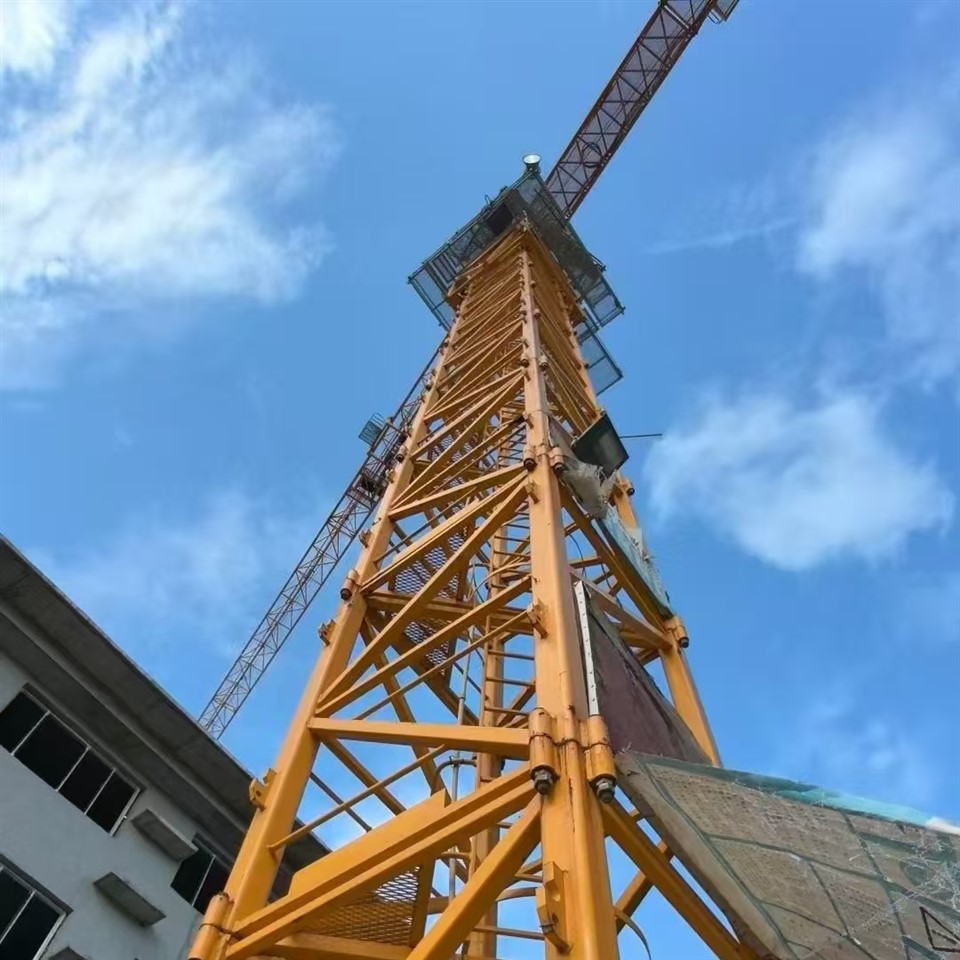

Step 3: Inserting New Mast Sections
Once the climbing frame has been lifted to a sufficient height, new mast sections are inserted into the space created. These new sections are carefully aligned with the existing mast. The locking devices on the climbing frame are then used to hold the new sections in place.
Step 4: Lowering the Crane onto the New Mast Sections
After the new mast sections are securely in place, the hydraulic cylinders reverse their action. They lower the main body of the crane so that it sits on top of the newly added mast sections.
Step 5: Re - locking the Crane
Finally, the locking devices are used again to lock the crane firmly to the new mast height. This ensures that the crane is stable and safe to operate at the increased height.
Comparison with Other Types of Tower Cranes
It's interesting to compare the Jack Up Tower Crane's self - climbing system with other types of tower cranes. For example, the Hammerhead Tower Crane has a different structure and operation. The hammerhead design features a horizontal jib that extends from the top of the mast. While it can be very effective for certain types of construction projects, its method of height adjustment isn't as self - sufficient as the Jack Up Tower Crane.
The Hydraulic Tower Crane also uses hydraulics, but its self - climbing mechanism might be different in terms of the way the hydraulic force is applied and the overall climbing process.
And then there's the Tower Head Crane. It has a distinct tower head structure, and its height - adjustment system has its own unique features.
Advantages of the Jack Up Tower Crane's Self - Climbing System
There are several advantages to using a Jack Up Tower Crane with a self - climbing system. One of the biggest benefits is the flexibility it offers. It can easily adapt to the changing height requirements of a construction project. This means that there's no need to constantly rely on external cranes or other heavy - lifting equipment to raise the crane.
Safety is another major advantage. The self - climbing system is designed with multiple safety features, such as the locking devices and the hydraulic controls. This reduces the risk of accidents during the climbing process.
Cost - effectiveness is also a plus. Since the crane can climb on its own, it saves on the costs associated with renting and operating external lifting equipment. This can lead to significant savings over the course of a large construction project.
Maintenance of the Self - Climbing System
To keep the self - climbing system in good working condition, regular maintenance is essential. The hydraulic system needs to be checked for leaks and proper fluid levels. The locking devices should be inspected for wear and tear. And the climbing frame should be checked for any signs of damage or misalignment.
It's also important to follow the manufacturer's guidelines for maintenance. This includes routine oil changes, lubrication of moving parts, and replacing any worn - out components.
Conclusion
In conclusion, the self - climbing system of a Jack Up Tower Crane is a remarkable piece of engineering. It allows the crane to reach great heights with relative ease and safety. The combination of the climbing frame, hydraulic system, and locking devices makes the climbing process smooth and reliable.
If you're in the construction industry and are looking for a versatile and efficient tower crane, a Jack Up Tower Crane with a well - functioning self - climbing system could be a great choice. Whether you're working on a high - rise building, a bridge, or any other large - scale construction project, this type of crane can meet your needs.
If you're interested in learning more about our Jack Up Tower Cranes or are thinking about making a purchase, don't hesitate to reach out. We're here to answer all your questions and guide you through the procurement process. Let's have a chat and see how we can help you with your construction equipment needs.
References
- Construction Equipment Handbook
- Tower Crane Operation Manuals


