

Hey there! As a supplier of Sym Tower Cranes, I often get asked about the weight of these beasts. It's a crucial question, especially for construction companies and contractors who need to transport, install, and operate these cranes safely and efficiently. So, let's dive into the details and find out what the weight of a Sym Tower Crane really means.
First off, it's important to understand that the weight of a Sym Tower Crane can vary significantly depending on several factors. These include the model of the crane, its configuration, the height at which it's erected, and the additional equipment or attachments it's equipped with. Just like cars come in different sizes and weights, tower cranes also have a wide range of weights to suit different construction needs.
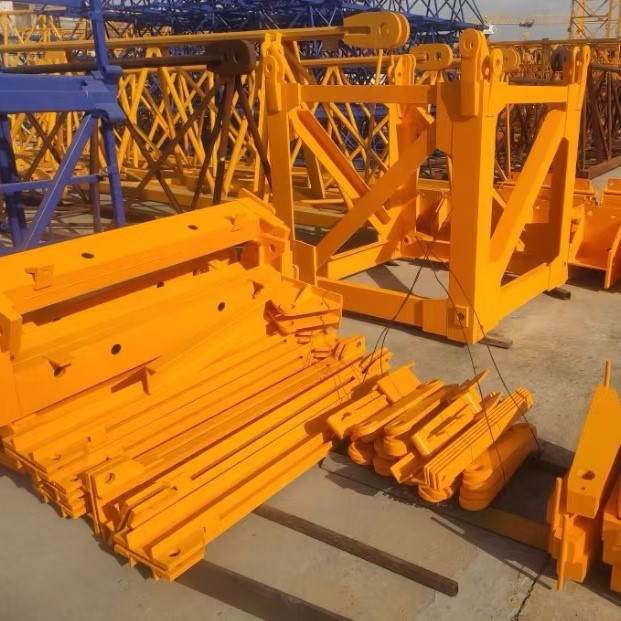
Let's start by looking at the basic components of a Sym Tower Crane. The main parts of a tower crane typically include the tower, the jib (the horizontal arm), the counter-jib (the arm on the opposite side of the jib), the slewing unit (which allows the crane to rotate), and the operator's cab. Each of these components has its own weight, and when you add them all up, you get the total weight of the crane.
The tower is the vertical structure that provides the crane with its height and stability. It's usually made up of steel sections that are bolted together on-site. The weight of the tower can vary depending on its height and the type of steel used. Generally, taller towers will be heavier than shorter ones. For example, a small Sym Tower Crane with a tower height of around 30 meters might weigh around 10 to 15 tons, while a larger crane with a tower height of 80 meters or more could weigh 50 tons or even more.
The jib is the long, horizontal arm that extends from the top of the tower. It's used to lift and move loads horizontally. The weight of the jib depends on its length and the type of construction. Longer jibs will be heavier than shorter ones. A typical jib for a Sym Tower Crane might weigh anywhere from 5 to 20 tons, depending on its size.
The counter-jib is located on the opposite side of the jib and is used to balance the weight of the load being lifted. It usually has a counterweight at the end to help keep the crane stable. The weight of the counter-jib and counterweight can also vary depending on the size and capacity of the crane. In some cases, the counterweight alone can weigh several tons.
The slewing unit is the part of the crane that allows it to rotate. It's usually located at the top of the tower and is connected to the jib and counter-jib. The weight of the slewing unit can vary depending on its size and the type of bearings and gears used. It typically weighs a few tons.
The operator's cab is where the crane operator sits and controls the crane. It's usually located on the side of the tower or on the jib. The weight of the operator's cab is relatively small compared to the other components of the crane, usually only a few hundred kilograms.
In addition to the basic components, a Sym Tower Crane may also be equipped with additional equipment or attachments, such as a hoist, a trolley, or a luffing mechanism. These additional components can add to the overall weight of the crane. For example, a hoist is used to lift and lower the load, and it can weigh anywhere from a few hundred kilograms to several tons, depending on its capacity.
So, as you can see, the weight of a Sym Tower Crane can vary widely depending on its size, configuration, and the additional equipment it's equipped with. It's important to know the weight of the crane before you transport it to the construction site, as you'll need to make sure you have the right equipment and vehicles to handle it. You'll also need to consider the weight when you're planning the installation of the crane, as you'll need to make sure the foundation is strong enough to support it.
Now, let's talk about some of the different types of Sym Tower Cranes and their weights. One popular type of tower crane is the Inner Climbing Tower Crane. This type of crane is designed to climb up the building as the construction progresses. It's usually lighter than a traditional tower crane because it doesn't need a large foundation. The weight of an inner climbing tower crane can vary depending on its size and capacity, but it's typically in the range of 10 to 30 tons.
Another type of Sym Tower Crane is the Electric Tower Crane. This type of crane is powered by electricity and is often used in urban areas where noise and emissions are a concern. Electric tower cranes are generally lighter than diesel-powered cranes because they don't have a large engine. The weight of an electric tower crane can vary depending on its size and capacity, but it's usually in the range of 15 to 40 tons.
Finally, there's the Potain Tower Crane. Potain is a well-known brand of tower cranes, and Sym Tower Cranes are often compared to Potain cranes. The weight of a Potain Tower Crane can vary depending on its model and configuration, but it's typically in the range of 20 to 60 tons.

So, now that you know a little bit about the weight of Sym Tower Cranes, you might be wondering how this information can help you. Well, if you're in the market for a tower crane, knowing the weight can help you make an informed decision. You'll need to consider the weight when you're comparing different models and brands of cranes, as well as when you're planning the transportation and installation of the crane.
If you're a construction company or contractor, you'll also need to make sure you have the right equipment and vehicles to handle the weight of the crane. You'll need to have a truck or trailer that's capable of transporting the crane to the construction site, as well as a crane or other lifting equipment to install it. You'll also need to make sure the foundation is strong enough to support the weight of the crane.
In conclusion, the weight of a Sym Tower Crane is an important factor to consider when you're in the market for a tower crane. It can vary widely depending on the size, configuration, and additional equipment of the crane. By understanding the weight of the crane, you'll be able to make an informed decision and ensure that you have the right equipment and vehicles to handle it.
If you're interested in learning more about Sym Tower Cranes or if you're thinking about purchasing one, please don't hesitate to contact us. We're here to help you find the right crane for your needs and to provide you with all the information you need to make an informed decision.
References:
- Crane Manufacturers Association of America (CMAA)
- American Society of Mechanical Engineers (ASME)
- International Organization for Standardization (ISO)


