

What is the slewing angle of a small tower crane? As a well - established small tower crane supplier, I'm frequently asked this question by our clients. In this blog, I'll delve into the concept of the slewing angle of small tower cranes, its significance, influencing factors, and real - world applications.
Understanding the Slewing Angle
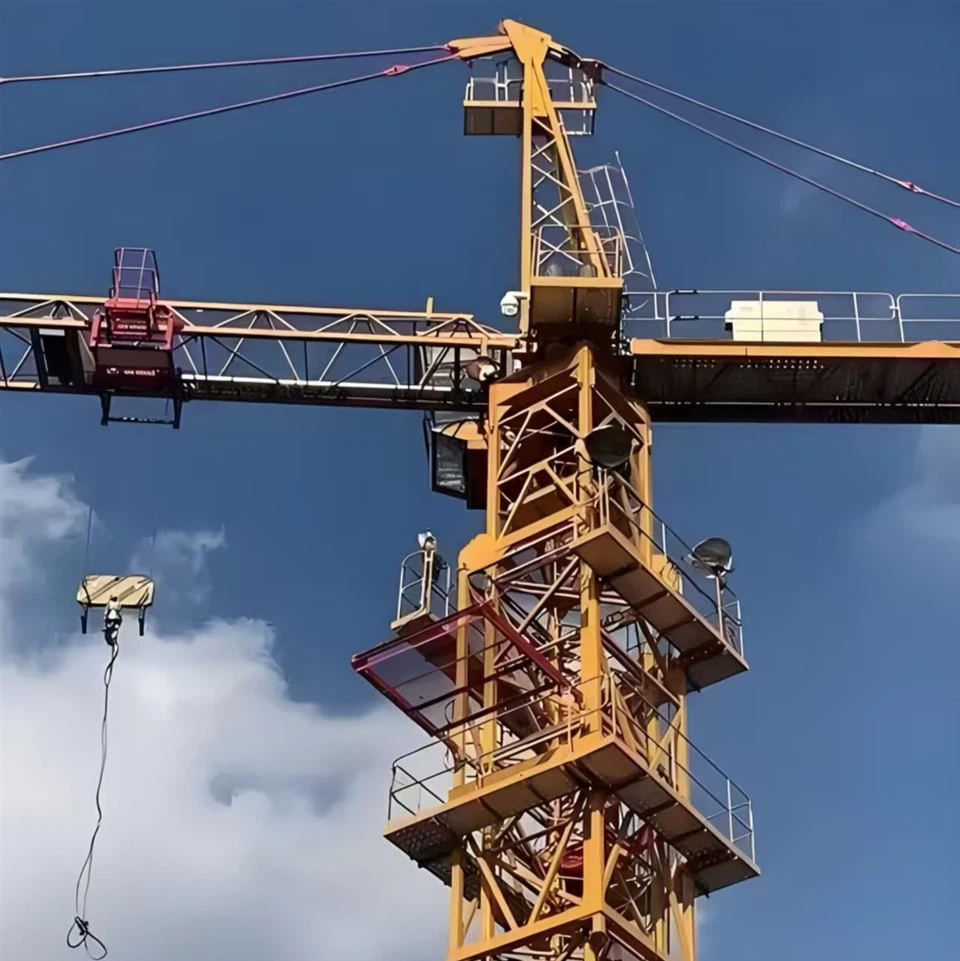
The slewing angle of a small tower crane refers to the range of rotation around its vertical axis. To put it simply, it's how far the crane can swing horizontally. Commonly, small tower cranes have a slewing angle that can vary significantly depending on their design and intended use.
Most small tower cranes can achieve a 360 - degree slewing angle. This full rotation ability is a major advantage as it allows the crane to reach any point within its working radius. For example, when constructing a small - scale building, a 360 - degree slewing angle enables the crane to pick up materials from a single storage area and transport them to different parts of the construction site without having to re - position the entire crane.
However, there are also small tower cranes with limited slewing angles. Some may have a slewing angle of 180 degrees or even less. These types of cranes are often used in situations where space is restricted or where the construction work is concentrated in a specific area. For instance, in an urban construction site with adjacent buildings that limit the crane's movement, a crane with a 180 - degree slewing angle can be a practical choice.
Significance of the Slewing Angle
The slewing angle is of utmost importance in determining the efficiency and flexibility of a small tower crane. A larger slewing angle generally means that the crane can cover a wider area without having to change its position frequently. This results in less time wasted on re - positioning, which can significantly speed up the construction process.
Moreover, the slewing angle influences the crane's ability to handle different types of construction tasks. If a project requires materials to be moved to various locations around the construction site, a crane with a large slewing angle will be more suitable. On the other hand, if the work is mainly focused on one side of the site, a crane with a limited slewing angle may be sufficient and could be a more cost - effective option.

Factors Influencing the Slewing Angle
There are several factors that can influence the slewing angle of a small tower crane.
1. Design and Structure: The mechanical design of the crane plays a key role. Cranes with a well - engineered slewing mechanism are more likely to achieve a larger and smoother slewing angle. For example, modern small tower cranes often use advanced bearings and gears to ensure seamless rotation.
2. Site Conditions: The physical environment of the construction site can also limit the slewing angle. As mentioned earlier, the presence of other buildings, obstacles, or power lines can restrict the crane's rotation. Site managers need to carefully assess these factors when choosing a crane with an appropriate slewing angle.
3. Load Capacity: The weight of the load being lifted can affect the slewing angle, especially when the load is close to the crane's maximum capacity. A heavier load may require the crane to operate within a more conservative slewing range to maintain stability.
Real - World Applications
Let's take a look at some real - world scenarios to understand the importance of the slewing angle.
In residential building construction, a Small Tower Crane with a 360 - degree slewing angle is often used. This allows contractors to lift bricks, cement, and other building materials from a central storage area and distribute them to different floors and sections of the building easily.
In bridge construction, where the work is often linear, a crane with a limited slewing angle might be sufficient. The crane can be positioned along the bridge axis, and a 180 - degree slewing angle can be used to lift construction components onto the bridge deck.
For industrial construction projects, such as the building of a factory, a Jack Up Tower Crane with a large slewing angle can be very useful. It can quickly move heavy machinery and equipment into place, improving the overall efficiency of the construction process.
Comparing with Other Types of Tower Cranes
When compared to larger tower cranes, the slewing angle of small tower cranes may have some differences. Larger cranes usually have more complex slewing mechanisms that can handle higher loads and achieve wider slewing angles. However, small tower cranes offer more portability and are easier to install in confined spaces.
Hydraulic Tower Crane is another type. The slewing angle of a hydraulic tower crane may be similar to that of a small tower crane, but the hydraulic system provides more precise control over the slewing movement. This can be an advantage in construction tasks that require accurate positioning of loads.
Choosing the Right Slewing Angle for Your Project
Selecting the appropriate slewing angle for your small tower crane is crucial for the success of your construction project. Here are some steps to help you make the right decision:
- Assess the Site: Evaluate the available space, the location of obstacles, and the layout of the construction area. This will give you an idea of the maximum slewing angle that can be utilized.
- Determine the Scope of Work: Consider the types of tasks that need to be performed, the locations of where materials and equipment need to be moved, and the frequency of movement.
- Budget Constraints: Keep in mind your budget. Towers with larger slewing angles may be more expensive, so you need to balance the cost and functionality according to your project requirements.
Contact Us for Your Small Tower Crane Needs
If you're in the market for a small tower crane and need guidance on choosing the right slewing angle for your project, we're here to help. As a reliable supplier of small tower cranes, we have a wide range of products to meet your specific needs. Our experienced team can provide in - depth consultations and assist you in making the best decision. Reach out to us today to start a discussion about your next construction project.
References
- Construction Equipment Handbook, various editions, which provide general information on tower crane technology and operation.
- Journal articles on construction engineering related to crane efficiency and selection, focusing on the impact of slewing angles.


