

In the realm of construction, tower head cranes stand as colossal symbols of power and precision. As a seasoned supplier of Tower Head Cranes, I've witnessed firsthand the pivotal role these machines play in shaping skylines and bringing ambitious architectural visions to life. Among the many critical components that contribute to the safe and efficient operation of a tower head crane, the balance system emerges as a cornerstone of its functionality. In this blog post, I'll delve into the importance of the balance system in a tower head crane, exploring its significance from various perspectives and highlighting how it ensures the safety, stability, and productivity of these remarkable machines.

Understanding the Basics of a Tower Head Crane
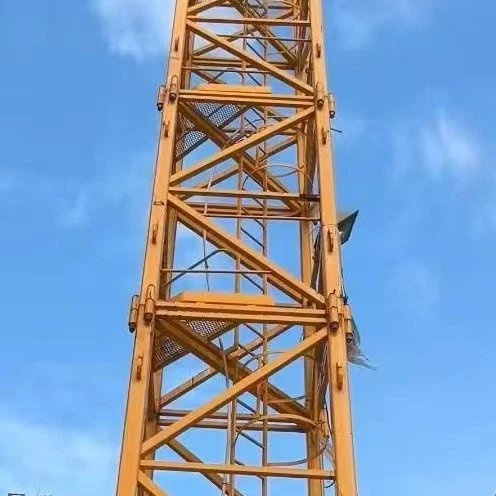
Before we dive into the intricacies of the balance system, let's take a moment to understand the fundamental components of a tower head crane. A tower head crane consists of a vertical mast, a horizontal jib, and a counter-jib. The mast provides the crane with its height and stability, while the jib extends horizontally from the mast and is used to lift and move heavy loads. The counter-jib, located on the opposite side of the mast from the jib, is equipped with counterweights that help to balance the crane and prevent it from tipping over.
The Role of the Balance System
The balance system in a tower head crane is designed to maintain the equilibrium of the crane under various operating conditions. It ensures that the crane remains stable and safe, even when lifting heavy loads at different radii and heights. The balance system achieves this by adjusting the position and weight of the counterweights on the counter-jib to counteract the forces exerted by the load on the jib.
One of the primary functions of the balance system is to prevent the crane from tipping over. When a load is lifted on the jib, it creates a moment or turning force that tends to rotate the crane around its base. The counterweights on the counter-jib are strategically positioned and weighted to create an opposing moment that balances the moment created by the load. This ensures that the crane remains stable and does not tip over, even when lifting heavy loads at maximum reach.
In addition to preventing tipping, the balance system also helps to reduce stress on the crane's structure. When a crane is unbalanced, it can cause excessive stress on the mast, jib, and other components, leading to premature wear and tear and potentially compromising the safety of the crane. By maintaining the balance of the crane, the balance system helps to distribute the loads evenly across the crane's structure, reducing stress and extending the lifespan of the crane.
Ensuring Safety and Stability
Safety is paramount in the operation of any crane, and the balance system plays a crucial role in ensuring the safety of the crane and its operators. A well-designed and properly maintained balance system helps to prevent accidents and injuries by keeping the crane stable and preventing it from tipping over.
One of the key safety features of the balance system is the use of load sensors and monitoring systems. These sensors are installed on the jib and counter-jib of the crane and are used to measure the weight and position of the load and the counterweights. The data collected by the sensors is then transmitted to a control system, which uses algorithms to calculate the optimal position and weight of the counterweights to maintain the balance of the crane. If the balance system detects that the crane is approaching an unsafe condition, such as a potential tip-over, it can automatically adjust the position and weight of the counterweights or issue an alarm to alert the operator.
Another important safety feature of the balance system is the use of redundant systems. In the event of a failure of one component of the balance system, such as a sensor or a hydraulic cylinder, the redundant systems ensure that the crane remains stable and safe. Redundant systems can include backup sensors, emergency counterweights, and fail-safe mechanisms that automatically engage in the event of a failure.
Enhancing Productivity and Efficiency
In addition to ensuring safety and stability, the balance system also plays a crucial role in enhancing the productivity and efficiency of a tower head crane. A well-balanced crane can lift heavier loads at greater heights and radii, reducing the number of lifts required to complete a project and increasing the overall productivity of the crane.
The balance system also helps to improve the accuracy and precision of the crane's movements. By maintaining the balance of the crane, the balance system reduces the amount of sway and vibration in the jib, allowing the operator to position the load more accurately and precisely. This can be particularly important in applications where precise positioning of the load is required, such as in the installation of precast concrete elements or the assembly of steel structures.
Types of Balance Systems
There are several types of balance systems used in tower head cranes, each with its own advantages and disadvantages. The most common types of balance systems include mechanical balance systems, hydraulic balance systems, and electronic balance systems.
Mechanical balance systems are the simplest and most traditional type of balance system. They use a system of pulleys, cables, and counterweights to adjust the position and weight of the counterweights on the counter-jib. Mechanical balance systems are reliable and easy to maintain, but they are limited in their ability to adjust the balance of the crane quickly and accurately.
Hydraulic balance systems use hydraulic cylinders to adjust the position and weight of the counterweights on the counter-jib. Hydraulic balance systems are more precise and responsive than mechanical balance systems, but they are also more complex and require more maintenance.
Electronic balance systems use sensors, controllers, and actuators to adjust the position and weight of the counterweights on the counter-jib. Electronic balance systems are the most advanced and sophisticated type of balance system, offering the highest level of precision and control. They can also be integrated with other systems on the crane, such as the load monitoring system and the anti-collision system, to provide a comprehensive safety and control solution.
Conclusion
In conclusion, the balance system is a critical component of a tower head crane, playing a crucial role in ensuring the safety, stability, productivity, and efficiency of the crane. A well-designed and properly maintained balance system helps to prevent accidents and injuries, reduce stress on the crane's structure, enhance the accuracy and precision of the crane's movements, and increase the overall productivity of the crane.
As a supplier of Tower Head Cranes, we understand the importance of the balance system and offer a range of cranes equipped with state-of-the-art balance systems. Our cranes are designed to meet the highest standards of safety and performance, and we provide comprehensive training and support to ensure that our customers can operate their cranes safely and efficiently.
If you're in the market for a Tower Head Crane, we invite you to [contact us] to learn more about our products and services. Our team of experts will be happy to answer your questions and help you choose the right crane for your needs. Whether you're working on a small construction project or a large-scale infrastructure development, we have the crane and the balance system to meet your requirements.
References
- "Tower Crane Handbook" by Frank J. Driscoll
- "Crane Safety and Operations" by the Occupational Safety and Health Administration (OSHA)
- "Design and Analysis of Tower Cranes" by the American Society of Civil Engineers (ASCE)


