

Hey there! As a supplier of Electric Tower Cranes, I'm super excited to dive into the main components of these amazing machines. Electric Tower Cranes are a crucial part of the construction industry, offering high efficiency and reliability. Let's take a closer look at what makes them tick.
Foundation
The foundation is the starting point of any Electric Tower Crane. It's like the base of a house, providing the stability and support that the entire crane needs. A well - designed foundation can handle the massive weight of the crane and the loads it lifts. Usually, it's made of reinforced concrete, which is poured on - site. The size and shape of the foundation depend on the type and capacity of the crane. For larger cranes, the foundation might be quite extensive to ensure proper balance. Without a solid foundation, the crane could tip over, which is a huge safety hazard.

Mast
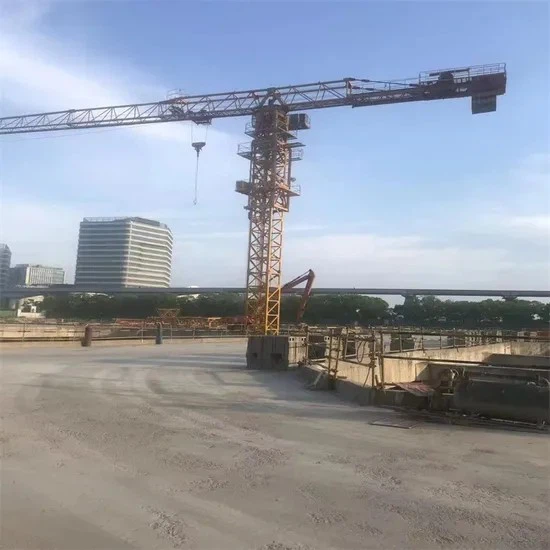
The mast is the vertical structure of the crane. It's like the backbone, rising high into the sky. Made of steel sections, the mast is assembled on - site. These sections are bolted or welded together to form a tall and sturdy structure. The mast not only supports the upper parts of the crane but also allows it to reach great heights. Some Electric Tower Cranes can have masts that are hundreds of feet tall, enabling them to work on high - rise buildings. The mast can be extended as the construction progresses, thanks to a special climbing mechanism.
Slewing Unit
The slewing unit is what allows the crane to rotate. It's located at the top of the mast and connects the mast to the jib and the counter - jib. This unit contains a large bearing and a motor - driven gear system. When the operator activates the slewing mechanism, the crane can turn 360 degrees. This rotation is essential for moving loads to different positions around the construction site. It gives the crane a wide range of coverage, making it more versatile. Whether you need to lift materials to one side of the building or the other, the slewing unit makes it possible.
Jib
The jib is the horizontal arm of the crane that extends outwards. It's where the lifting hook is attached. The jib can vary in length, depending on the crane's design and intended use. Longer jibs can reach further, which is useful for larger construction sites. There are different types of jibs, such as lattice jibs and telescopic jibs. Lattice jibs are made of a framework of steel bars, providing strength and lightness. Telescopic jibs, on the other hand, can be extended or retracted, giving more flexibility in terms of reach. The jib is a key component for getting the load to the right place.
Counter - Jib
Opposite the jib is the counter - jib. Its main function is to balance the weight of the load on the jib. The counter - jib has a counterweight at its end, which is usually made of concrete blocks. The amount of counterweight is carefully calculated based on the crane's capacity and the length of the jib. If the counter - jib is not properly balanced, the crane could become unstable. So, getting the right counterweight is crucial for safe and efficient operation.
Hoisting Mechanism
The hoisting mechanism is responsible for lifting and lowering the load. It consists of a motor, a drum, and a wire rope. The motor drives the drum, which winds or unwinds the wire rope. As the wire rope moves, the lifting hook attached to it goes up or down. The hoisting mechanism needs to be powerful enough to lift heavy loads quickly and smoothly. Modern Electric Tower Cranes often have advanced hoisting systems that can be controlled precisely by the operator. This allows for accurate placement of the load at the desired height.
Control System
The control system is the brain of the Electric Tower Crane. It's located in the operator's cab, which is usually situated near the slewing unit. The operator uses various controls, such as joysticks and buttons, to operate the crane. The control system monitors and regulates all the functions of the crane, including slewing, hoisting, and trolley movement. It also has safety features, such as overload protection and emergency stop buttons. With the control system, the operator can ensure that the crane operates safely and efficiently.
Trolley
The trolley is a device that runs along the jib. It's connected to the lifting hook by the wire rope. The trolley allows the load to be moved horizontally along the jib. By moving the trolley, the operator can position the load at different points along the length of the jib. This gives more flexibility in terms of load placement. The trolley is powered by an electric motor, which makes it easy to control its movement.
Now, I want to mention some related products. If you're interested in Electric Tower Cranes, you can check out our Electric Tower Crane page. We also have Inner Climbing Tower Crane and Flat Top Crane options available.
If you're in the market for an Electric Tower Crane or have any questions about these components, don't hesitate to get in touch with us. We're here to help you find the right crane for your construction needs. Whether you're building a small structure or a large high - rise, our Electric Tower Cranes can provide the performance and reliability you require.
References
- Construction Equipment Handbook
- Crane Manufacturer's Manuals


