

Hey there! I'm a supplier of flat top tower cranes, and I often get asked, "How long does it take to assemble a flat top tower crane?" Well, let me break it down for you.
First off, the time it takes to assemble a flat top tower crane can vary quite a bit. There are several factors that come into play, like the crane's size, the complexity of its design, the experience of the assembly crew, and the site conditions.
Size and Complexity
Bigger cranes generally take longer to put together. A small - scale flat top tower crane might be relatively quick to assemble. These smaller ones are often used in less demanding construction projects, like building small - to - medium - sized residential buildings. For a basic small flat top tower crane, with a relatively simple design and standard components, the assembly process could take anywhere from 2 to 3 days. This assumes that the assembly crew is well - trained and the site is in good working condition.
On the other hand, large - scale flat top tower cranes are a different story. These beasts are designed for heavy - duty construction projects, such as high - rise buildings or large industrial complexes. They have more components, larger parts, and more complex mechanisms. Assembling a large flat top tower crane can take up to a week or even longer. The extra time is needed for tasks like erecting the mast sections, installing the jib and counter - jib, and connecting all the electrical and hydraulic systems.
Assembly Crew Experience
The experience of the assembly crew is crucial. A team of highly experienced technicians who have assembled flat top tower cranes many times before can work much more efficiently. They know the ins and outs of the process, can quickly identify and solve any problems that arise, and are familiar with the safety procedures.
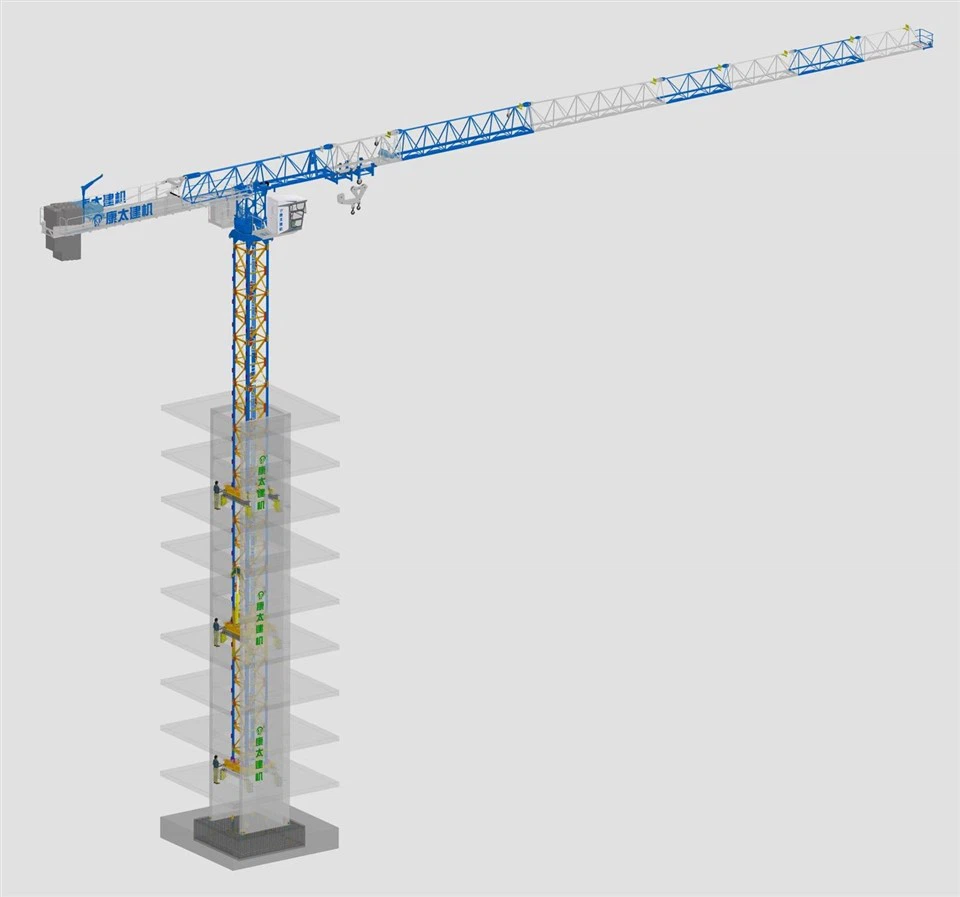

For example, an inexperienced crew might take several extra days just to figure out how to properly connect the jib to the mast. In contrast, an experienced crew can complete this task in a fraction of the time. So, if you're looking to get your crane up and running as quickly as possible, it's worth investing in a professional and experienced assembly team.
Site Conditions
The site where the crane will be assembled also matters a great deal. If the site is flat, well - drained, and has easy access for transporting the crane components, the assembly process will go more smoothly. However, if the site is uneven, has limited space, or is in a difficult - to - reach location, it can significantly slow down the assembly.
For instance, if the site is on a slope, the crew will need to spend extra time leveling the base of the crane to ensure its stability. And if there are obstacles like trees or other structures in the way, they'll have to find ways to work around them. In some cases, the crew might even need to modify the assembly plan to adapt to the site conditions.
The Assembly Process
Let's take a closer look at the typical steps involved in assembling a flat top tower crane.
Foundation Installation
The first step is to install the foundation. This is a critical part of the process because a stable foundation is essential for the safety and proper functioning of the crane. The foundation installation can take a day or two, depending on its size and complexity. The crew will dig the foundation pit, pour the concrete, and install the anchor bolts.
Mast Erection
Once the foundation is set, the next step is to erect the mast. The mast is the vertical part of the crane that provides the height. The mast sections are usually assembled on the ground first and then lifted into place one by one. This process can take a couple of days, especially for larger cranes with more mast sections.
Jib and Counter - Jib Installation
After the mast is erected, the jib and counter - jib are installed. The jib is the horizontal arm of the crane that extends out over the work area, while the counter - jib balances the weight of the jib. Installing the jib and counter - jib is a delicate operation that requires careful planning and coordination. It can take a day or two, depending on the size of the crane.
Electrical and Hydraulic System Connection
Once the mechanical parts are in place, the electrical and hydraulic systems need to be connected. These systems control the movement of the crane, such as lifting, lowering, and slewing. Connecting these systems can take a day or so, as the crew needs to ensure that all the connections are correct and that the systems are functioning properly.
Testing and Commissioning
Finally, after the crane is fully assembled, it needs to be tested and commissioned. This involves running a series of tests to check the crane's performance and safety features. The testing and commissioning process can take a day or two, and it's an important step to ensure that the crane is ready for use.
Related Products
If you're interested in different types of tower cranes, we also offer Flat Top Crane and Inner Climbing Tower Crane. And for those who prefer a well - known brand, our Zoomlion Tower Crane is a great option.
Conclusion
So, as you can see, the time it takes to assemble a flat top tower crane can range from a few days to over a week, depending on various factors. If you're planning a construction project and need a flat top tower crane, it's important to factor in the assembly time when creating your project schedule.
If you're interested in purchasing a flat top tower crane or have any questions about the assembly process, don't hesitate to get in touch with us. We're here to help you choose the right crane for your project and ensure a smooth assembly process.
References
- Construction Equipment Handbook: Tower Cranes
- Industry reports on flat top tower crane assembly times


