

Hey there! I'm a supplier of Heavy Lift Tower Cranes, and today I'm gonna spill the beans on how these bad boys lift heavy loads vertically. It's a pretty fascinating process, and I'm stoked to share it with you.
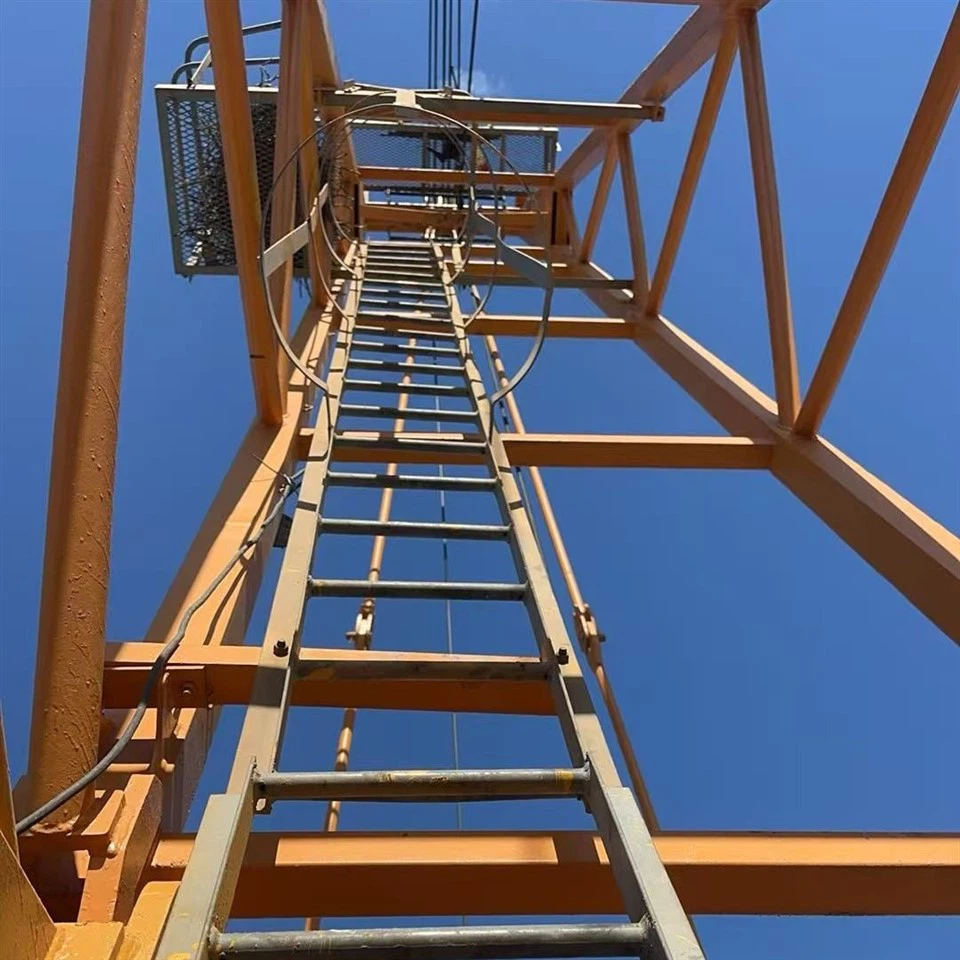
First off, let's talk about the basic components of a heavy lift tower crane. You've got the mast, which is the tall, vertical structure that gives the crane its height. Then there's the jib, which is the horizontal arm that extends out from the mast. The counter-jib is on the opposite side of the mast and helps balance the crane. And of course, there's the hoist, which is the mechanism that actually does the lifting.
Now, when it comes to lifting heavy loads vertically, the hoist is the star of the show. It's usually powered by an electric motor or a diesel engine, and it uses a system of ropes and pulleys to lift the load. The ropes are attached to the load and run through a series of pulleys on the jib and the mast. As the hoist motor turns, it winds the ropes around a drum, which raises the load.
But it's not just as simple as turning on the motor and watching the load go up. There are a lot of factors that need to be considered to ensure a safe and successful lift. For example, the weight and size of the load need to be carefully calculated to make sure the crane can handle it. The crane operator also needs to take into account the wind speed and direction, as well as the stability of the ground the crane is sitting on.
Another important factor is the angle of the jib. The jib can be adjusted to different angles, which affects the crane's lifting capacity. When the jib is at a lower angle, the crane can lift heavier loads, but it has a shorter reach. When the jib is at a higher angle, the crane has a longer reach, but it can lift less weight.
So, how do you know which angle to use? Well, that's where the crane's load chart comes in. The load chart is a document that shows the crane's lifting capacity at different angles and distances. The crane operator uses the load chart to determine the maximum weight the crane can lift at a given angle and distance, and then makes sure the load they're lifting is within that limit.
Now, let's talk about some of the different types of heavy lift tower cranes. One popular type is the Luffing Jib Tower Crane. This type of crane has a jib that can be raised and lowered, which allows it to work in tight spaces and around obstacles. The luffing jib also gives the crane a greater lifting capacity at higher angles.
Another type of heavy lift tower crane is the Potain Luffing Tower Crane. Potain is a well-known brand in the crane industry, and their luffing tower cranes are known for their reliability and performance. These cranes are often used in construction projects where high lifting capacity and precision are required.
Of course, my personal favorite is the Heavy Lift Tower Crane. As a supplier of these cranes, I can tell you that they're some of the most powerful and versatile cranes on the market. They're designed to lift extremely heavy loads, and they can be used in a wide range of applications, from construction to industrial projects.
So, if you're in the market for a heavy lift tower crane, I highly recommend checking out our selection. We offer a variety of cranes from different manufacturers, so you're sure to find one that meets your needs and budget. And if you have any questions or need help choosing the right crane, our team of experts is here to assist you.

In conclusion, lifting heavy loads vertically with a heavy lift tower crane is a complex process that requires careful planning and execution. But with the right equipment and a skilled operator, it can be done safely and efficiently. Whether you're working on a small construction project or a large industrial development, a heavy lift tower crane can be a valuable asset.
If you're interested in learning more about our heavy lift tower cranes or have any questions about the lifting process, please don't hesitate to contact us. We'd love to hear from you and help you find the perfect crane for your project.
References
- "Tower Crane Handbook" by Frank J. DiSantis
- "Cranes: Design and Application" by William A. Crain


