

When it comes to construction projects in mountainous areas, the choice of equipment is crucial. One question that often arises is whether a flat top tower crane can be effectively used in such challenging terrains. As a supplier of flat top tower cranes, I have had the opportunity to explore this issue in depth and would like to share my insights.
Advantages of Flat Top Tower Cranes in Mountainous Areas
1. Compact Design
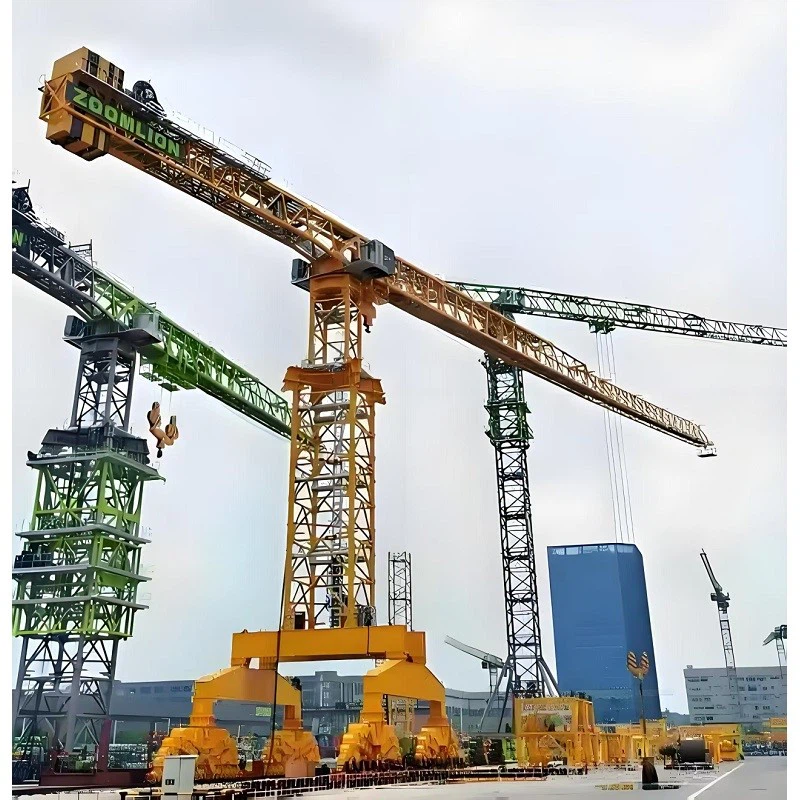
Flat top tower cranes feature a compact and simplified design compared to traditional hammerhead tower cranes. This design is particularly beneficial in mountainous areas where space is often limited. The absence of a large, overhanging jib reduces the overall footprint of the crane, allowing it to be installed in relatively confined spaces. For example, in a mountainous construction site with narrow valleys or limited flat areas, a flat top tower crane can be set up more easily without the need for extensive space for jib movement.
2. Easy Assembly and Disassembly
In mountainous regions, transportation and installation of heavy equipment can be extremely difficult. Flat top tower cranes are designed for easy assembly and disassembly. Their modular components can be transported more conveniently on trucks or even by helicopters in some cases. This means that the crane can be quickly set up at the construction site and, when the project is completed, disassembled and moved to another location with relative ease. This flexibility is a significant advantage in mountainous construction projects where the construction site may change frequently.
3. High Lifting Capacity
Despite their compact design, flat top tower cranes are capable of providing high lifting capacities. We offer a range of flat top tower cranes, including the Tower Crane 100 Ton, Tower Crane 25 Ton, and Tower Crane 10 Ton. These cranes can handle heavy loads, which is essential for mountainous construction projects that often involve the lifting of large building materials such as steel beams, pre - cast concrete elements, and heavy machinery.

4. Reduced Wind Resistance
Mountainous areas are often subject to strong and unpredictable winds. The flat top design of these cranes reduces wind resistance compared to traditional tower cranes. This means that the crane is more stable in windy conditions, reducing the risk of accidents and allowing for safer operation. The lower wind resistance also means that the crane can continue to operate in relatively high - wind situations, which is crucial for maintaining the construction schedule in mountainous regions where weather conditions can change rapidly.
Challenges and Solutions
1. Foundation Requirements
In mountainous areas, the ground conditions can be very uneven and unstable. The foundation of a flat top tower crane needs to be carefully designed and constructed to ensure the stability of the crane. In some cases, special foundation techniques such as piled foundations or reinforced concrete pads may be required. Our engineering team has extensive experience in designing foundations for different ground conditions. We can conduct detailed geotechnical surveys of the construction site and provide customized foundation solutions to ensure the safe operation of the crane.
2. Terrain Adaptability
The irregular terrain in mountainous areas can pose challenges for the movement and positioning of the crane. To address this issue, our flat top tower cranes can be equipped with advanced leveling systems and adjustable outriggers. These features allow the crane to be leveled and stabilized on uneven ground, ensuring accurate and safe lifting operations. Additionally, the cranes can be designed with a variable - length jib, which can be adjusted according to the terrain and the requirements of the construction project.
3. Communication and Monitoring
In mountainous regions, communication and monitoring of the crane's operation can be difficult due to the lack of reliable communication infrastructure. To overcome this problem, we offer flat top tower cranes with advanced telemetry systems. These systems can transmit real - time data about the crane's operation, such as load capacity, wind speed, and position, to a remote monitoring center. This allows for continuous monitoring of the crane's performance and early detection of any potential problems, ensuring the safety and efficiency of the construction project.
Case Studies
We have successfully supplied flat top tower cranes for several construction projects in mountainous areas. For example, in a hydro - power project in a mountainous region, our Tower Crane 25 Ton was used to lift heavy equipment and building materials to the construction site. The compact design of the crane allowed it to be installed in a narrow valley, and its high lifting capacity and stability in windy conditions ensured the smooth progress of the project.
In another project, a high - altitude residential construction in the mountains, our Tower Crane 10 Ton was used to lift pre - cast concrete elements. The easy assembly and disassembly of the crane enabled it to be quickly moved between different construction sites within the mountainous area, saving time and cost.
Conclusion
In conclusion, flat top tower cranes can be effectively used in mountainous areas. Their compact design, easy assembly and disassembly, high lifting capacity, reduced wind resistance, and adaptability to different challenges make them a suitable choice for construction projects in these regions. However, careful consideration needs to be given to foundation requirements, terrain adaptability, and communication and monitoring.
If you are planning a construction project in a mountainous area and are considering using a flat top tower crane, we would be more than happy to assist you. Our team of experts can provide you with detailed information about our products, customized solutions based on your project requirements, and professional after - sales service. Contact us to start a discussion about your procurement needs and let us help you find the best flat top tower crane solution for your mountainous construction project.
References
- Construction Equipment Handbook: Tower Cranes, published by Construction Industry Press
- Geotechnical Engineering for Mountainous Construction, by Geotechnical Society of Mountainous Regions
- Safety Standards for Tower Crane Operation in Challenging Terrains, issued by International Construction Safety Association


