






Hammerhead Boom Crane
Hammerhead boom cranes excel in high-rise construction and other projects requiring frequent lifting operations, efficiently handling diverse hoisting and installation tasks. Thanks to their superior performance and operational flexibility, they have become the preferred choice for high-density urban areas and challenging construction environments.
Introduction of hammerhead boom crane
Metal Structure:
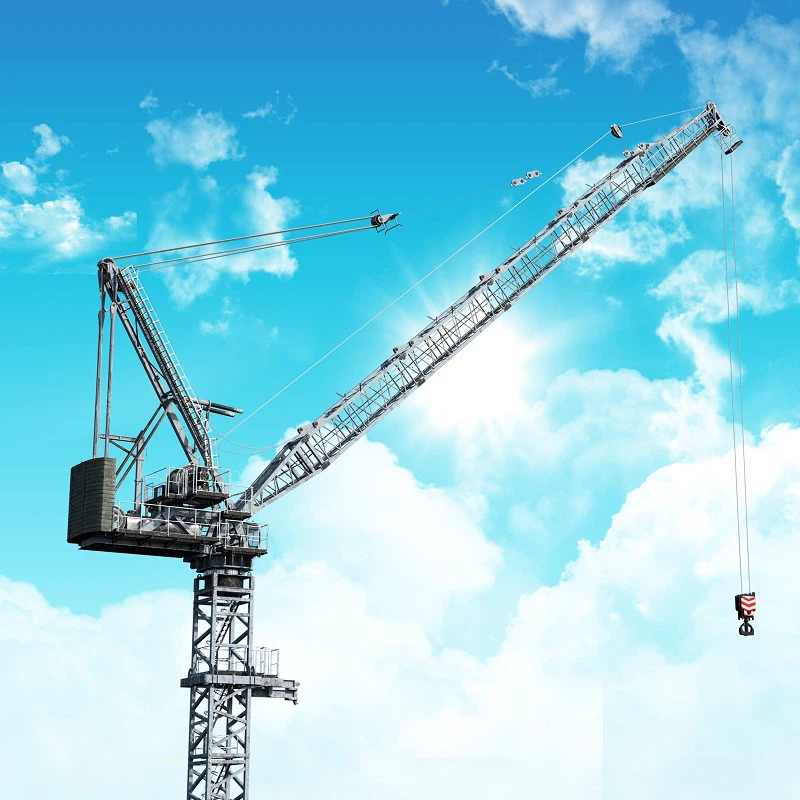
The metal structure of a tower crane serves as the fundamental material base for bearing loads, transmitting forces, and meeting operational requirements. It primarily consists of the following components: the boom (jib), tower mast, slewing platform (turntable), bearing pedestal, counter-jib, base frame (undercarriage), and tower top (apex).
The boom structure typically adopts a luffing-jib horizontal configuration. Based on the number of suspension points, it can be classified into single-lift point and double-lift point types (both are statically determinate structures). Additionally, there is the hammerhead-style luffing-jib horizontal boom, which integrates the boom and counter-jib into a single unit. This hammerhead boom is mounted atop the tower mast, resembling a hammerhead, and its cross-section commonly features a regular triangular shape.
The tower structure, also known as the tower frame, forms the crane's primary framework.
The tower cranes all adopt square sections, and the section sizes are widely used: 1.2m× 1.2m, 1.4m× 1.4m, 1.6m× 1.6m, 2.0m× 2.0m; The common sizes of the standard section of the tower body are 2.5m and 3m. The most widely used connection mode adopted by the standard section of the tower body is the cover bolt connection and the sleeve bolt connection, followed by the bearing pin shaft connection and the plug plate pin shaft connection. The standard section has the integral tower body standard section and the assembled tower body standard section, the latter has high processing precision and is difficult to make, but the stacking occupies a small area and the freight is less.
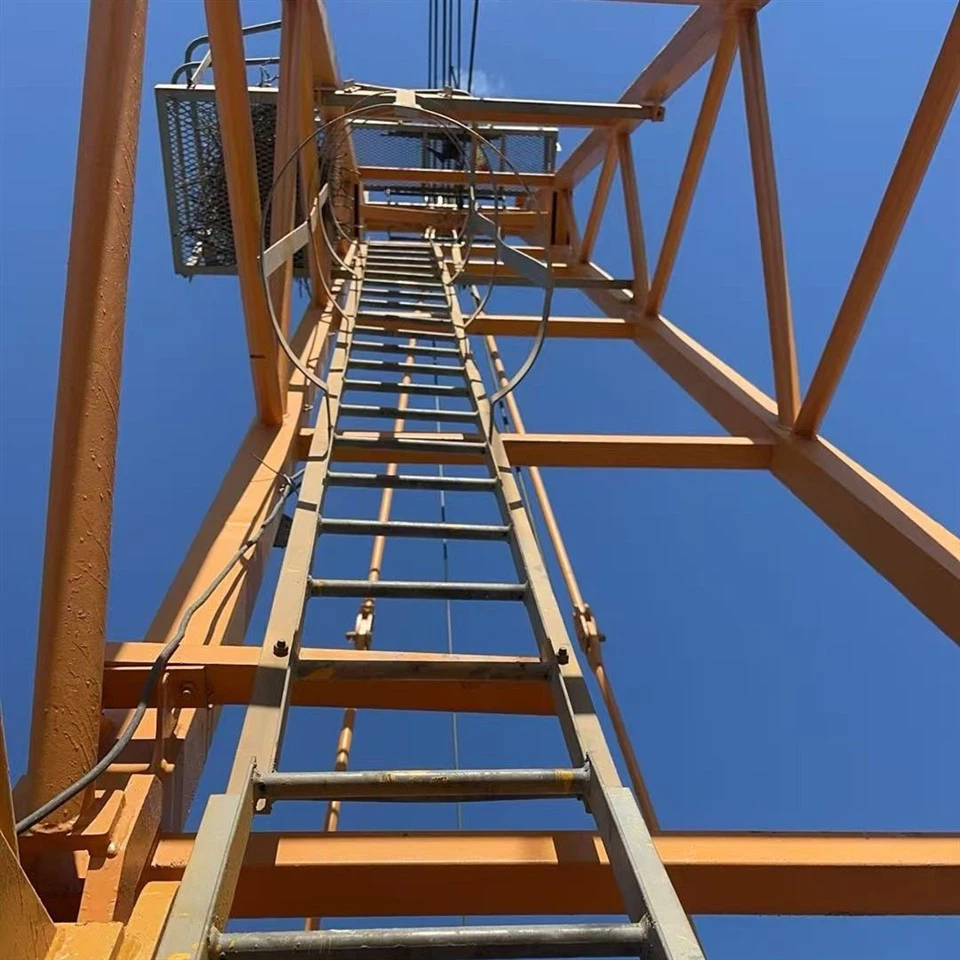
Ladders must be set up in the tower section to facilitate the driver and mechanic to get up and down. The width of the ladder should not be less than 500mm, the spacing of the steps should not be more than 300mm, and a retainer ring should be set every 500mm. When the height of the ladder exceeds 10m, the ladder should be transferred in sections, and a rest platform should be added at the transfer.
The function of the spire is to bear the upper load from the boom rope and the balance arm rope, and directly transmit it to the tower structure through the structural components of the rotary tower, turntable, bearing seat, etc. The top of the self-elevating tower has truncated cone type, forward or backward truncated cone type, herringbone frame type and diagonal brace frame type.
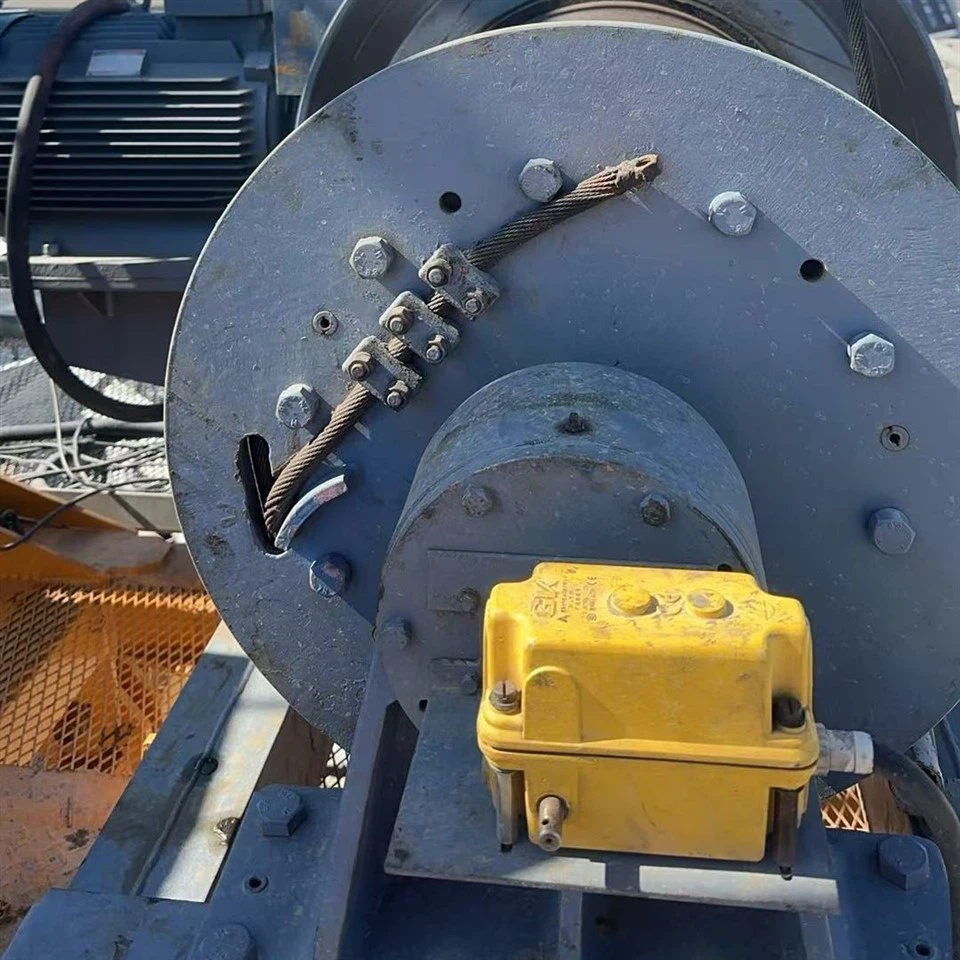
All the upper rotary tower crane needs to be set with a counterweight, and its function is to support the counterweight, which is used to constitute the balance moment that is opposite to the direction of the lifting moment in terms of action required by the design. In addition to the counterweight, a lifting mechanism is often installed at its tail. The reason why the hoisting mechanism is placed at the tail end of the balance arm together with the counterweight is that one can play the role of part of the counterweight, and the other is to increase the distance between the rope drum and the spire guide wheel, so as to facilitate the arrangement of the wire rope and avoid the phenomenon of chaotic rope. The amount of counterweight is inversely proportional to the length of the balance arm, and there is a certain proportional relationship between the length of the balance arm and the length of the lifting arm. The amount of counterweight is considerable, the light tower crane is generally at least 3~4t, and the heavy tower crane is nearly 30t.
The counterweight can be made of cast iron or reinforced concrete: the former is expensive to process but has a small windward area; The latter is large in size and large on the windward side, which is not good for stability, but it is simple and economical, so it is generally used. The usual practice is to divide the counterweight prefabrication into 2 ~ 3 specifications, the width and thickness are the same, but the height is adjusted to match the use of different length booms.
Part and components
Each tower crane has to use many kinds of lifting parts, among which the largest number, strict technical requirements and complex specifications are wire ropes. The wire rope used for the tower crane is different according to the function: hoisting wire rope, luffing wire rope, boom rope, balance arm rope, trolley traction rope, etc. The characteristics of the wire rope are: the strength of the whole root is high, and the whole section is the same size, the strength is consistent, the weight is light, it can withstand the vibration load, the elasticity is large, it can be wound into a disk, it can balance the movement at high speed, and there is no noise, and its outer skin will produce many burrs after wear, which is easy to find and convenient for timely disposal.
The wire rope is usually made of a strand of thin steel wire with a diameter of 0.3~0.4mm and then twisted into a rope. The tower crane uses an alternate twist, which is characterized by not easy to loosen and twist. As far as the cross-sectional shape of the rope strands is concerned, the tower crane for high-rise building construction is most suitable to adopt multi-strand non-torsion wire rope, this kind of wire rope rope is composed of two layers of rope strands, and the two layers of rope strands are twisted in opposite directions, and the principle of rotational moment balance is adopted, and the free end does not twist when stressed.
The safety factor of tower crane hoisting wire rope and luffing wire rope is generally taken as 5~6, the safety factor of trolley traction rope and boom rope is taken as 3, and the safety factor of tower crane elevator lifting rope shall not be less than 10. The safety factor of the wire rope is an indispensable safety reserve factor, and the maximum allowable safety load of the wire rope must not be increased by virtue of this safety reserve surface. Due to the importance of the wire rope, it is necessary to strengthen the regular comprehensive inspection of the wire rope, store it in a warehouse with a closed dry surface, a wooden floor or asphalt concrete floor, so as to avoid corrosion, do not damage the surface when loading and unloading, and erect and place it when stacking. Systematic lubrication of the wire rope can increase the service life.
Luffing trolley is an essential component of the horizontal boom tower crane. The whole set of luffing trolley is composed of frame structure, wire rope, pulley, traveling wheel, guide wheel, wire rope support wheel, wire rope anti-off roller, trolley tow rope tensioner and broken rope fuse. For the extra-long horizontal boom (length of more than 50m), a maintenance basket is hung on the side of the luffing trolley, which can carry maintenance personnel to each maintenance point for repair and maintenance. After the operation is completed, the trolley drives back to the root of the boom, so that the gondola is decoupled from the luffing trolley, and is fixed at the special support on the boom structure. Other components include pulleys, slewing rings, hooks and brakes.
Working Body
The working mechanism of the tower crane has the following types: hoisting mechanism, luffing mechanism, trolley traction mechanism, slewing mechanism, jacking mechanism and trolley traveling mechanism (walking tower crane). The main electrical equipment of the tower crane of electrical equipment includes: cable reel - central collector ring, electric motor, electrical appliances for operating the motor, such as: controller, master controller, contactor and relay. Protection appliances, such as automatic fuses, overcurrent relays and limit switches, etc. Control and switching appliances in the main and auxiliary circuits, such as buttons, switches and meters. Auxiliary electrical equipment includes: lighting, signal lights, electric bells, etc.
Hydraulics
The main components in the hydraulic system of the tower crane are hydraulic pumps, hydraulic cylinders, control components, oil pipes and pipe joints, oil tanks and hydraulic oil filters, etc. The hydraulic pump and hydraulic motor are the most complex parts of the hydraulic system, the hydraulic pump sucks the oil in and delivers it to the hydraulic cylinder or hydraulic motor through the pipe, so that the hydraulic cylinder or motor can operate properly. The hydraulic pump can be regarded as the hydraulic pressure and the heart, and it is the energy source of the hydraulic pressure. Most of the hydraulic pumps used in China's tower crane hydraulic jacking system are CB-G type gear pumps, CB non-gear code, Heglon G is a fixed axial clearance, and the working pressure is 12. 5~16MPa. A hydraulic cylinder is an actuator of a hydraulic system. From a functional point of view, the hydraulic cylinder and the hydraulic motor are both conversion devices for the pressure energy of the working oil flow to mechanical energy. The difference is that hydraulic motors are used for rotary motion, while hydraulic pressure is used for linear motion.
Safety devices
The safety device is one of the indispensable key equipment of the tower crane, which can be divided into: limit switch (limiter); overload fuse (overload power-off device); Buffer stop device; wire rope anti-disconnection device; Anemometer; emergency safety switches; Safely protect the sound signal.
The limit switch has the following functions: hook stroke limit switch, rotary limit switch, trolley travel limit switch, cart travel limit switch.
Anti-tipping
It is strictly forbidden to overload the operation; Do not pull heavy objects diagonally; Do not brake suddenly; It is forbidden to run lifting operations in high winds; After the working shift, the rail clamp must be clamped to prevent the tower crane from being blown out of the track by strong winds.


Hot Tags: hammerhead boom crane, China hammerhead boom crane suppliers, building crane machine, building site crane, building tower crane, first tower crane, hook tower crane, jacking a tower crane
Previous
Tower Head CraneYou Might Also Like


Send Inquiry